

• About Us
  • Society
  • Health
  • Technology
  • Culture
  • World
  • Entertainment
  • Competition
The Pioneer Magazine
  • About Us
    • WRITE WITH US
  • Society
  • Health
  • Technology
  • Culture
  • World
  • Entertainment
  • Competition

The Green Revolution: Sustainable Finance and Its Role in Mitigating Climate Change

Posted by Editor on January 9th, 2025

The Green Revolution: Sustainable Finance and Its Role in Mitigating Climate Change

As the world grapples with the escalating challenges of climate change, sustainable finance has emerged as a critical tool in the global effort to transition towards a more sustainable and environmentally friendly economy. This movement towards green finance signifies a profound shift in how investments are made, prioritizing long-term environmental sustainability alongside traditional financial returns.

Sustainable finance encompasses a range of financial services, including green bonds, social bonds, sustainability-linked loans, and investment funds that aim to support environmental and social objectives. This approach not only seeks to mitigate the adverse effects of climate change but also to address goals like biodiversity conservation, pollution reduction, and social inclusion.

The global momentum for sustainable finance is driven by a combination of factors:

  1. Regulatory Push: Governments and international bodies are increasingly implementing policies and frameworks to encourage the growth of sustainable finance. Initiatives like the European Union’s Sustainable Finance Action Plan and the Task Force on Climate-related Financial Disclosures (TCFD) are pushing for greater transparency and accountability in how environmental risks are managed and reported.
  2. Market Demand: Investors are showing a growing preference for sustainable investment options, driven by the realization that environmental risks can impact financial performance. This shift is evidenced by the rapid growth in assets under management in ESG (Environmental, Social, and Governance) funds.
  3. Technological Advancements: Innovations in technology, such as artificial intelligence and blockchain, are providing new ways to measure and track the environmental impact of investments, making it easier for investors to make informed decisions based on sustainability criteria.
  4. Corporate Sustainability: Companies across the globe are increasingly integrating sustainability into their business models and operations, driven by both regulatory pressures and consumer demand for more responsible business practices.

The rise of sustainable finance represents an acknowledgment that financial decisions today have profound implications for the world tomorrow. By redirecting capital towards more sustainable investments, the financial sector can play a pivotal role in achieving a low-carbon, climate-resilient economy. This includes financing renewable energy projects, supporting sustainable agriculture and forestry, and investing in technologies that reduce greenhouse gas emissions.

However, challenges remain in scaling up sustainable finance. These include the need for standardized definitions and metrics for sustainability, the integration of sustainability into financial decision-making processes, and addressing the investment gap in developing countries.

In conclusion, sustainable finance is not just a trend but a fundamental shift in the investment landscape, reflecting a growing consensus that finance should serve not only economic but also environmental and social objectives. As this field continues to evolve, it will be critical for investors, companies, and policymakers to work together to overcome barriers and unlock the full potential of finance as a force for good in the fight against climate change.


Yuchen Ji
Read More »

Plastic Pollution: A Major Challenge to Environmental Sustainability

Posted by Editor on December 28th, 2024

Plastic Pollution: A Major Challenge to Environmental Sustainability

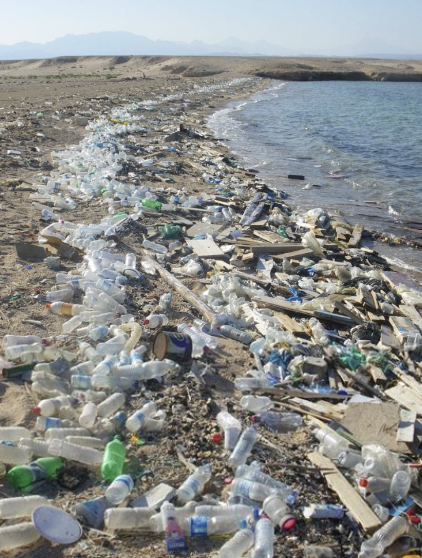
In today’s society, environmental sustainability faces numerous severe challenges, among which plastic pollution is particularly prominent. Thanks to its characteristics of being lightweight, durable, and low-cost, plastic is widely used in modern life, from food packaging to industrial materials, and it can be found everywhere. However, this has also led to the proliferation of plastic waste on a global scale.

The large amount of plastic garbage is randomly discarded on land and in the ocean. In the ocean, plastic waste not only spoils the beauty of the marine ecosystem but also poses a deadly threat to marine life. Many marine animals mistakenly swallow plastic as food, resulting in blocked intestines and stomachs, malnutrition, and even death. According to statistics, millions of tons of plastic waste enter the ocean yearly, and massive “plastic garbage patches” have already formed in some sea areas.

The accumulation of plastic waste occupies a large amount of land resources. It is difficult to degrade in the natural environment and may persist for hundreds of years. Even though some plastics can be recycled, the recycling system is still imperfect, and the recycling rate is relatively low.

Solving the problem of plastic pollution requires the joint efforts of the whole society. The government should introduce stricter regulations to limit the production and use of disposable plastic products and, at the same time, increase investment in plastic recycling and treatment facilities. Enterprises should shoulder their social responsibilities, research and develop degradable plastics or look for alternative plastics, and optimize product packaging design to reduce plastic use. As ordinary people, we can start with small things in our daily lives, such as reducing the use of disposable plastic bags, straws, and plastic tableware and bringing our own environmentally friendly shopping bags and water cups.

Only when the government, enterprises, and the public work together to form a comprehensive response strategy can we possibly win the battle to protect the environment against plastic pollution and steadily move the whole society towards environmental sustainability, leaving a clean and healthy earth home for future generations.

Ronghan Zhang

Read More »

Plastic Pollution: A Major Challenge to Environmental Sustainability

Posted by Editor on December 2nd, 2024

Plastic Pollution: A Major Challenge to Environmental Sustainability


In today’s society, environmental sustainability faces numerous severe challenges, among which plastic pollution is particularly prominent. Thanks to its characteristics of being lightweight, durable, and low-cost, plastic is widely used in modern life, from food packaging to industrial materials, and it can be found everywhere. However, this has also led to the proliferation of plastic waste on a global scale.


A large amount of plastic garbage is randomly discarded on land and in the ocean. In the ocean, plastic waste not only spoils the beauty of the marine ecosystem but also poses a deadly threat to marine life. Many marine animals mistakenly swallow plastic as food, resulting in blocked intestines and stomachs, malnutrition, and even death. According to statistics, millions of tons of plastic waste enter the ocean yearly, and massive “plastic garbage patches” have already formed in some sea areas.


The accumulation of plastic waste occupies a large amount of land resources. It is difficult to degrade in the natural environment and may persist for hundreds of years. Even though some plastics can be recycled, the recycling system is still imperfect, and the recycling rate is relatively low.


Solving the problem of plastic pollution requires the joint efforts of the whole society. The government should introduce stricter regulations to limit the production and use of disposable plastic products and, at the same time, increase investment in plastic recycling and treatment facilities. Enterprises should shoulder their social responsibilities, research and develop degradable plastics or look for alternative plastics, and optimize product packaging design to reduce plastic use. As ordinary people, we can start with small things in our daily lives, such as reducing the use of disposable plastic bags, straws, and plastic tableware and bringing our own environmentally friendly shopping bags and water cups.


Only when the government, enterprises, and the public work together to form a comprehensive response strategy can we possibly win the battle to protect the environment against plastic pollution and steadily move the whole society towards environmental sustainability, leaving a clean and healthy earth home for future generations.


Ronghan Zhang

Read More »

Interpreter of Maladies: Superficiality of romanticism

Posted by Editor on November 30th, 2024

Interpreter of Maladies: Superficiality of romanticism

Like some of the other stories in Jhumpa Lihiri’s short story collections, “The Interpreter of Maladies” consists of themes that relate to miscommunication and ethnic differences, but this story’s main focus lies in the superficiality of romantic dynamics, as the two main characters find attraction in an unknown ideal and later the shattering of their respective romantic hopes in the other. Lihiri succeeds in her purpose to demonstrate the flimsiness of romance through clichés, irony, and symbols that aptly describe the character’s truths.

The story begins with a slew of clichés in the character’s descriptions. Written in third narrative in the point-of-view of Kapasi, Mr. and Mrs. Das are described as typical, rude western tourists. Mr. Das appears to be a hard-working professional who simply wants to relax while on vacation. He is like any other dad intent on capturing family moments with his tourists’ camera, and he is dressed like any American on vacation. Mrs. Das’ description is ever more clichaic and unkind; she comes across as coolly rude in her sunglasses as she nibbles on her rice cakes, which she offers to no one. Her dialogue is also curt and impolite to both Mr. Kapasi and to her family. Finally, Mr. Kaposi, too, displays redundancy – he is a typically poor native working several jobs, dreaming of a better life such as those of his tourism clients. As such, Lihiri offers entertaining, if not insightful, descriptions of her characters.

The more interesting, and the insightful, elements of the story appears in the sudden ironies. The main contradictions occurs when, after both Mr. Kapasi and Mrs. Das’ see the other as clichés, the two characters are attracted to each other. The turning point, of course, is when Mrs. Das exclaims that Mr. Kapasi’s job is romantic. At this point, Lihiri is in full control. At this point, Lihiri begins to unwrap the profundity of her intension, because the reader can only understand Mrs. Das’ meaning after the character has made her sympathetic plea to Mr. Kapasi. But not before Mr. Kapasi has also fallen for Mrs. Das, for before she tells her story, Mr. Kapasi believes that her rude apathy is the result of her boring American housewife’s life, which is similar to his life of broken dreams. Thus, with one ironic word, “romantic”, Lihiri has transformed a routine story about differences in culture into a profound explanation of the fragility of attractions.

Had the author ended the story by allowing Mr. Kapasi and Mrs. Das to run away together – as it seemed until Mr. Kapasi’s own singular comment –  the story would have ended just as it began, predictably. Yet, because of Mr. Kapasi’s honest comment that Mrs. Das feels guilt, the reader can clearly see how the symbols that magnify the deep meanings of Lihiri’s prose. Mrs. Das cannot see the truth that she should feel guilt, because “guilt” is not the response she is expecting from Mr. Kapasi, when she believed could understand other people’s “maladies”. Rather, she is revolted enough to leave the car, as the rice cake crumblings follow her to the story’s conclusion. The rice cake crumblings symbolize the guilt that she rejects, and the monkeys that attack Bobby then represent the fear she had been hiding. Perhaps, she may never tell her husband about her adultery, but what happens to Bobby and her horror at seeing the attack represent perhaps the imaginations if Mr. Das comes to his sense. As for Mr. Das, in many ways, his camera ironically symbolizes his provineial attitude concerning his family. The camera captures memorizes and visual truths, but Mr. Das only sees what is in front of him: in his mind, a typical American family. The story, then, consists of a surprising ending, not at all like the predictable beginning; but it is an appropriate conclusion given the symbolic clues Lihiri has offered.

“The Interpreter of Maladies” certainly consists of more than an ethnic lesson. Although Jhumpa Lihiri initially establishes a typical narrative that seems to consist of cultural themes, the story becomes much more profound and universal.

Jinhyung Cho

Read More »

人口老龄化带来的社会影响

Posted by Editor on November 21st, 2024

人口老龄化带来的社会影响

人口老龄化是当今众多国家面临的主要社会问题之一。尤其是在中国,人口老龄化主要指老年人口的比例逐渐增加,可劳动人口的数量逐渐减少,对社会会产生重大的影响,不仅会给国家和社会带来更多压力也极大的加剧了劳动力市场的紧张局势。

首先,老龄化给社会带来的巨大压力主要体现于养老金和医疗方面需求的增加。这代表政府需要投入更多资源和资金,形成了严重的财政负担。更多的养老金支出可能会面临税收的增加,间接导致了社会年轻人的负担加重。医疗和社会服务方面的需求也为国家带来了重大压力,老年人有更高的患病可能性,国家需要投入更多去进行预防和治疗。在社会服务方面,老年人需要更多的社会服务,如体检,护理以及各种各样的社会帮助,这无疑是给社会添加了更多负担。

其次,人口老龄化带来了紧张的劳动力市场也给予了家庭更大的压力,在就业环境本就不好的社会,家中年轻人需要承担起赡养老人的义务,加重了年轻人的经济负担,也间接导致了生育率的不断下降,这更加重了劳动力的短缺,形成了恶性的循环。而劳动力的供给不足对社会的影响更为重大,不仅影响到了公司和企业的扩张,甚至影响到了他们的正常运转,劳动力的减少也面临着人力成本的增加,为企业带来了压力。

面对人口老龄化,我们应当正视这一现象的发生,政府应当适当给予家庭补贴,避免对年轻人产生过多压力导致恶性循环。同时我们也应该鼓励老年人也力所能及的积极参与社区活动,不仅有助于身心健康也可以降低社会压力。人口老龄化是一个不可阻止的趋势,但只有积极应对,才能带来更好的社会。


人工智能对社会的影响

近些年来,人工智能正在快速发展,已经开始逐渐改变社会格式以及我们的日常生活。同时,人工智能的发展在对社会提供巨大帮助的同时,也对社会产生了重大的影响。这份影响体现在就业方面和安全方面。

人工智能可以代替大部分的传统岗位,可以试试自动化生产,尤其针对于重复性高的流水线工作,比如客服,工人等职业。而这些职业也恰恰是大部分普通人所就业的方向,尤其是服务业,生产业等行业。人工智能的参与可以大大降低人工成本,减少人工犯错的可能性,更加方便管咯,提高工作效率,但也导致了大量劳动者会面临失业的风险。而对于劳动者来说,这份工作的丢失可能导致一个家庭的破坏,产生了重大的影响。对于高要求的岗位来说,人工智能也具有更加丰富的数据库可以提供更多思路,也有更加先进快速的算法,不仅会替代很多职业,也创造了许多新的职业,有很多人专门从事AI相关的工作,形成了新的社会体系。

人工智能的发展也带来了很多安全隐患,比如无人驾驶汽车,虽然为生活提供了便捷,但是如果因系统出错导致交通事故,谁应该承担主动责任。AI算法也经常会出现失误,在涉及到道德与伦理层面的问题,AI无法覆盖到这些层面的思考,毕竟人工智能基于数据而不是情感。而大量的数据需求代表他需要不断的进行数据的采集与提取,在这个过程中,对于人民的个人数据采集和使用可能会侵犯到我们的隐私。比如用AI生成的画作与图片都是通过现有的画作进行融合并重新制作,这是否涉及到抄袭也有待考证。

人工智能的迅猛发展为社会带来了巨大的便利,同时也衍生出了许多困难与挑战。在促进发展的同时也带来了极大的风险。我们不应该过于依赖人工智能,把它看作工具而不是依靠,国家和政府应该制定合理的法律来对人工智能进行一定的制约,加强对人工智能的监管,确保民众的隐私安全,促进更良好的社会。1


Jiani (Jenny) Wang

1

Read More »
« Older Entries
Newer Entries »
  • WRITE WITH US

    The Pioneer Magazine is a student magazine managed by students across the world to promote their ideas, perspectives, and future visions. We cover a comprehensive range of topics, including technology, society, education, health, and the world. Our student writers, journalists, and contributors represent countries from around the world, and we all share a common passion for writing, collaboration, and a better world. We are always interested in having students write with us. Please contact us at editor@thepioneermagazine.org if you wish to join us or contribute.
  • FEATURE VIDEO

  • Sustainability for the Youth | Robyn Mijares | TEDxXavierSchool

Copyright © The Pioneer Magazine - An International Student Magazine