

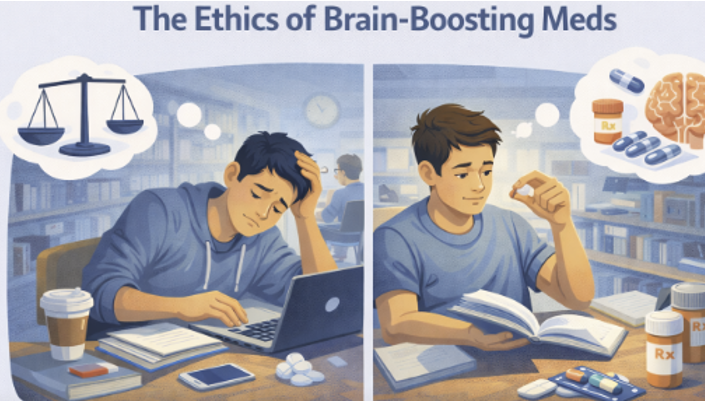
The Ethics of Brain-Boosting Meds
Walk into the library during finals week and you will eventually hear someone whispering about “study drugs.” The use of prescription stimulants like Adderall or Vyvanse by students without ADHD has become an open secret on most campuses. We talk about it like it is just an extra-strong cup of coffee, but the ethics of using “brain boosters” are actually pretty complicated. Is it a form of academic cheating, or is it just a desperate response to a university system that demands an impossible level of output?
On one hand, it creates an uneven playing field. If one student can pull an all-nighter with chemical help and another cannot, the grades stop being a measure of intelligence and start being a measure of access to medication. But on the other hand, many students feel like they have no choice. When the curve is high and the tuition is even higher, the pressure to perform becomes a survival instinct. We have created an academic environment that is so intense that students feel they need to “hack” their own biology just to keep up.
The real problem might not be the pills themselves, but the culture that makes them feel necessary. We should be asking why our workloads are designed in a way that makes normal human focus feel inadequate. Instead of just policing who is taking what, we need to have a conversation about the mental health toll of the “constant performance” model. If we need medication to meet the standard, maybe the standard is what needs to change.
 Posted in