

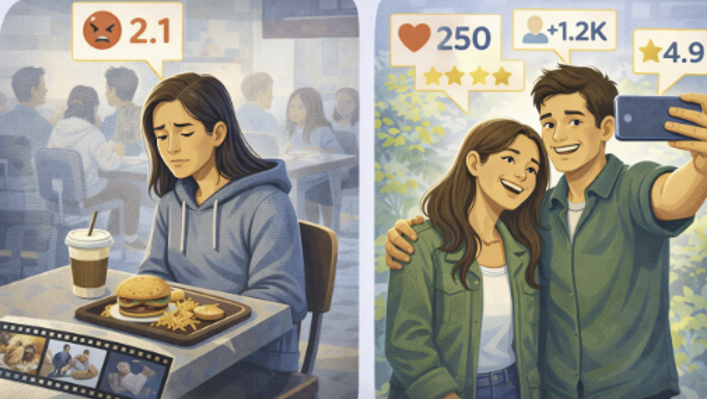
Social Credit on Campus
We like to think that the “social credit” systems seen in dystopian sci-fi movies are far-off nightmares, but we are already living in a version of them right now. Think about how we judge each other based on digital footprints. We look at a person’s follower count, their LinkedIn connections, or even their “vibe” on a dating app before we even speak to them in person. We have started to rate each other like we rate Uber drivers or Airbnbs. It is a subtle form of social ranking that is changing how we form friendships.
On campus, this often looks like “clout” being used as currency. If you have a large digital following, you have more social capital in clubs and organizations. If you have been “called out” online, you might find yourself physically isolated in the dining hall. Our reputations are no longer built through one-on-one interactions; they are managed like a public relations campaign. We are constantly aware that one “wrong” post or a low engagement rate could affect our social standing.
This creates a high-anxiety environment where nobody feels like they can be truly authentic. We are all performing for an invisible audience, hoping to keep our “rating” high enough to stay relevant. But a community built on digital scores is incredibly fragile. We need to remember that people are more than their data points. Real trust and real friendship are built in the moments where the cameras are off and the “ratings” do not matter. We have to make sure we are connecting with humans, not just profiles.
 Posted in