
• About Us
  • Society
  • Health
  • Technology
  • Culture
  • World
  • Entertainment
  • Competition
The Pioneer Magazine
  • About Us
    • WRITE WITH US
  • Society
  • Health
  • Technology
  • Culture
  • World
  • Entertainment
  • Competition

The scarcity of late-night taxis

Posted by Editor on September 10th, 2025

A decline of late-night taxis due to a host of issues, such as high barriers to entry and low wages for taxi drivers, has garnered the attention of the citizens of South Korea. In response to this shrinkage, the transport minister of South Korea has put forth his list of solutions to increase the supply of late-night taxis. This article clearly shows the concept of scarcity. Scarcity is present as the demand for taxis at night is high, but supply is limited. Furthermore, the price mechanism cannot manage and allocate resources efficiently as fares are regulated. This article specifically talks of the transport minister’s plan for government intervention to decrease the scarcity of late-night taxis.

After the Covid-19 pandemic, South Korea suffers from a late-night taxi shortage. Throughout the pandemic, the majority of people remained inside their homes. South Koreans started to do everything at home, including work and shopping. This meant less demand for taxis, and due to a government-mandated 10 pm curfew for all businesses, this meant even less demand for late-night taxis. The lack of outside contact meant a steep decline in transportation for personal travel and a steep increase in demand for delivery services. These two jobs have high occupational mobility because they require similar skills and have few barriers or costs involved in switching between them. This prompted a change of occupation for a lot of late-night taxi drivers.

SINCE RECOVERY – SHORTAGES

  • Demand has recovered
  • Supply still low
  • Usually, prices would rise if there is excess demand
  • Fares are regulated, so they cannot rise
  • SHORTAGE

In an effort to directly ease the scarcity of late-night taxis, the government has started considering removing regulations in the taxi industry.


Figure 1: Late-night taxi shortage
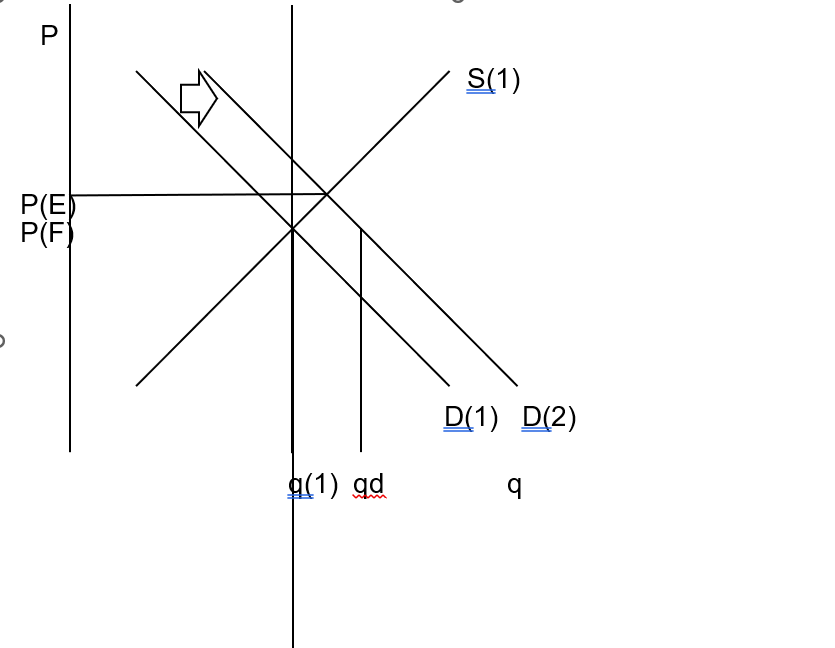
 

In this diagram, the problem of stagnant fares at P(F) is identified despite an outward shift in demand from D1 to D2. The price of late-night taxi fares is not increased to the price equilibrium due to the price ceiling. This creates market disequilibrium, and since qd > qs, this creates a shortage.

As a result of excess demand, taxi drivers have leverage over potential passengers, and they can discriminate certain taxi rides for what fits them best, which can marginalize certain groups. To resolve and eliminate the consequence of shortages, the government has discussed ideas to keep potential passengers’ “destinations hidden from drivers.” as “taxi drivers pick and choose their customers, preferring to give rides to those who travel long distances since charges are added depending on the distance and time covered.”. The scarcity of late-night taxis creates a power imbalance between taxi drivers and riders, as riders have a small pool of taxi drivers, but taxi drivers have a big pool of riders from which they can choose. Thus, taxi drivers can discriminate against riders.


Figure 2: Solution 1 (Price increase)
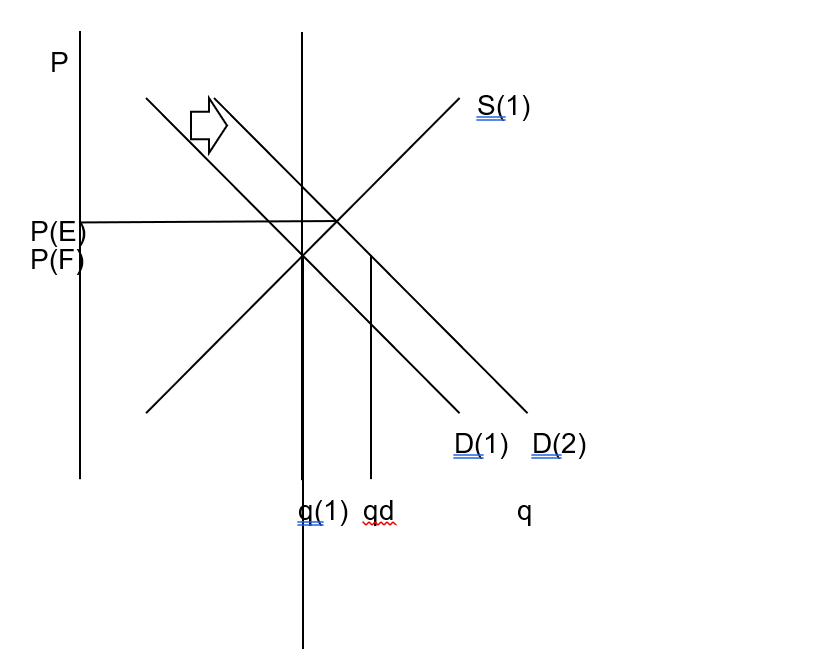
 

In this diagram, a new equilibrium point is found after an outward shift in the demand curve. To account for this, the price is corrected from P1 to P2. As the law of demand commands, an increase in demand leads to an increase in price.

While prices remain low, the quantity provided will, too, as there is less incentive to give the good or service as the cost of the factors of production eats away the profit, and there may be other alternatives that are more worthwhile producing, such as taxi driver to delivery driver, the occupational mobility required for this change of job is very low. In this case, the taxi fares could be more satisfactory; thus, the number of taxi drivers has dropped to other jobs. To incentivize late-night taxi drivers, incentives and an “Increase in the basic cab fare and surcharges for taxis operating late at night” have all been mentioned.


Figure 3: Solution 2 (Supply increase)
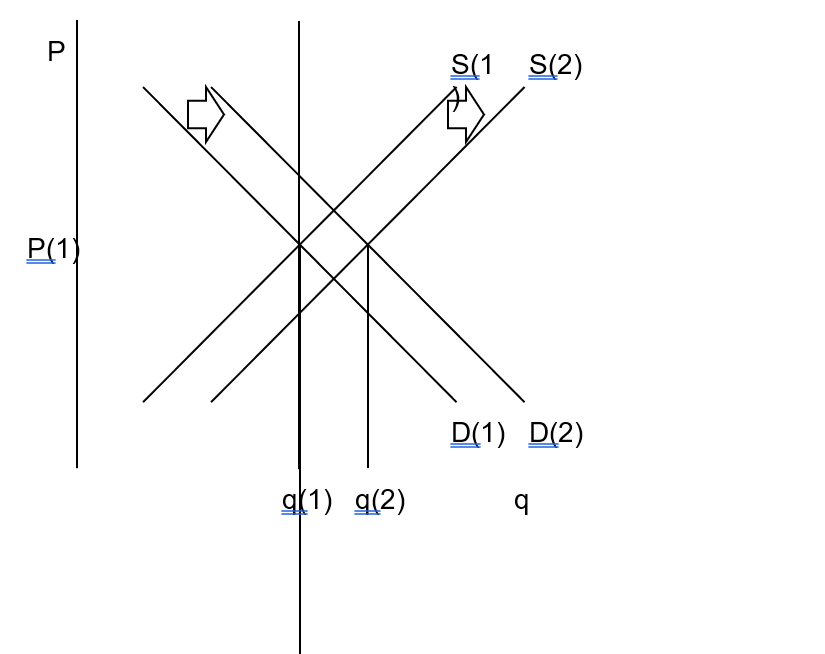
 

There are also two equilibrium points in this diagram; however, the price stays the same. This is possible because supply shifts to the same amount as the demand curve.

Car-and-ride-sharing services as last resort offers, such as carpools, also increase the number of taxis as they do the work of two or more taxis simultaneously but less efficiently. Ideas for legalizing illegal call taxis, such as Uber, have been discussed. The reason for this is that if there’s demand that is not met, this is also the result of shortages. When demand is unmet, people will attempt to satisfy their needs and wants despite the means. Legalizing these illegal taxis will make them more easily safe and traceable as they are no longer prohibited; they can register and license their cars with their respective authorities to operate and have a reason to follow the taxi protocol of their region. This not only cancels some of the negative consumption externalities, such as the discrimination of taxi riders, but also increases the quantity of late-night taxi drivers. However, a hurdle that needs to be crossed is legislation, as taxi firms like Uber were banned due to conflicts between local governments, such as the labor party rallying against Uber to protect domestic taxi drivers. The government will have to approach such issues like this with care.


James Cho

Read More »

Social Impacts of Population Aging

Posted by Editor on August 6th, 2025

Social Impacts of Population Aging

Population aging is one of the major social challenges facing many countries today. In China in particular, it refers to the growing share of older adults and the gradual decline in the working-age population. This shift has significant effects on society: it increases pressure on the state and communities and greatly intensifies strains in the labor market.

First, the heaviest pressure shows up in pensions and healthcare. Governments must devote more resources and funding, creating a serious fiscal burden. Rising pension expenditures may require higher taxes, which indirectly increases the load on younger generations. Demand for medical care and social services also climbs: older adults are more likely to become ill, so the state must invest more in prevention and treatment. In terms of social services, seniors need more support—health checkups, nursing care, and various forms of assistance—adding further strain to society.

Second, a tighter labor market heightens pressure on families. In an already difficult job environment, young people are expected to support their elders, increasing their financial burden and indirectly contributing to lower birth rates. That, in turn, worsens labor shortages and creates a vicious cycle. Insufficient labor supply affects not only business expansion but even routine operations, while reduced workforce availability pushes up labor costs and squeezes firms.

We should face population aging squarely. The government can provide appropriate family subsidies to avoid overburdening young people and fueling a negative spiral. At the same time, older adults should be encouraged to take part in community activities within their ability, which supports physical and mental health and eases social pressures. Aging is an unstoppable trend, but active responses can lead to a better society.

Jiani Wang

Read More »

The Impact of Artificial Intelligence on Society

Posted by Editor on July 1st, 2025

The Impact of Artificial Intelligence on Society

In recent years, artificial intelligence has advanced rapidly, gradually reshaping social structures and everyday life. While AI offers enormous benefits, it also brings significant impacts—especially in employment and safety.

AI can replace many traditional roles and enable automated production, particularly for repetitive, assembly-line tasks such as customer service and factory work. These jobs employ many ordinary people, especially in the service and manufacturing sectors. AI can lower labor costs, reduce human error, simplify management, and improve efficiency—but it also exposes many workers to the risk of unemployment. For individuals, losing a job can destabilize an entire family. At the higher-skill end, AI’s large databases and faster, more advanced algorithms not only displace some roles but also create new ones, with many people now working directly in AI-related fields and forming new professional ecosystems.

AI’s development also raises safety concerns. Take self-driving cars: they bring convenience, but if a system failure causes an accident, who is responsible? Algorithms make mistakes, and on questions involving morality and ethics, AI cannot fully reason at that level—it is based on data, not emotion. The large data demands of AI require continual collection and extraction, which can infringe personal privacy if not handled properly. For example, AI-generated images often remix existing artworks; whether this constitutes plagiarism remains a matter of debate.

AI’s rapid growth brings great convenience but also many difficulties and challenges. Alongside progress come real risks. We should not over-rely on AI; we should treat it as a tool, not a crutch. Governments need to craft sensible laws and oversight to set boundaries, strengthen regulation, protect people’s privacy, and foster a healthier society.

Jiani Wang

Read More »

To Be Holistic

Posted by Editor on June 11th, 2025

To Be Holistic

Xingyu Chen


In recent years, the traditional emphasis on academic achievements as the sole criterion for graduation has begun to change. Universities increasingly recognize the importance of non-academic achievements, which can nurture well-rounded graduates equipped to navigate the complexities of the modern world. In order to educate students to be holistic talents, universities should develop a non-academic standard for graduation.

Non-academic achievements, such as leadership, community service, and physical fitness, significantly contribute to students’ holistic development and can enhance their academic performance. According to the research from California State University, Sacramento, students participating in extracurricular activities not only achieved higher retention and graduation rates but also maintained superior GPAs. Theoretically speaking, participating in non-academic activities contributes to five measures, Behavioral Engagement, Cognitive Engagement, Conscientiousness, Self-efficacy, and Hope, which are positively correlated with academic success. These findings suggest that engagement in non-academic pursuits develops transferable skills that bolster academic performance.

In today’s rapidly changing job market, non-academic achievements are particularly responsive to emerging professional demands. Through extracurricular involvement, students often encounter real-world scenarios that mirror workplace challenges, which facilitates the acquisition of skills that traditional academic settings may overlook. For instance, many universities set up art organizations enabling students to organize events, and allowing them to gain practical experience in teamwork. At Shanghai Jiao Tong University, the Art Center empowers students to oversee gala events that cultivate creativity, communication, and collaboration, skills highly sought after in today’s workforce.

To effectively evaluate non-academic achievements, universities should implement diverse assessment methods that encourage student participation while retaining flexibility. According to the Interim Measures for the Administration of Student Volunteer Service, universities can track volunteer hours and categorize students as one to five-star volunteers. Those who have accumulated 100, 300, 600, 1,000, and 1,500 hours of service since the beginning of their college years are recognized as one to five-star volunteers respectively. By assigning grades based on the duration and quality of volunteer work, presentations, and other contributions, institutions can recognize non-academic endeavors as part of the graduation rating. This balanced evaluation would reflect both in-class and out-of-class performance, ensuring that the students meet comprehensive graduation standards.

In conclusion, integrating flexible non-academic graduation standards does not undermine academic rigor; instead, appropriate standards complement it. Such an approach equips students with the capability to face diverse challenges in their professional and personal lives, and fosters a balance between intellectual capability and emotional, physical, and social well-being. By validating both academic and non-academic achievements, universities can nurture graduates who are not only knowledgeable but also adaptable, responsible, and ready to thrive in society.


Read More »

Resilence in Crisis: From “The Plague”to Global Pandemics

Posted by Editor on June 2nd, 2025

Resilence in Crisis: From “The Plague”to Global Pandemics

Feiyu Lin


Albert Camus’s novel “The Plague”, published in 1947, depicts an epidemic destroying a small town-Oran. In the epidemic, as the epidemic spreads, the government establishes a strict quarantine, locking the town gates to keep the sickness from spreading to nearby areas. The citizens of Oran are separated from the outside world, and as the epidemic becomes worse, the government asks for mandatory quarantine and case reporting to control the spread. The two main characters, Dr. Rieux and Rambert reflect two opposing perspectives on the plague: one confronts suffering with a persistent reality, while the other shifts from pursuing personal happiness to embracing social responsibility. These two mindsets are consistent with Camus’ concept of absurdism, particularly in the instance of Dr. Rieux, who represents a paradoxical view of existence.  He focuses not just on “do good” but, more importantly, focues on”not doing harm.”His viewpoint represents the concept that, while the universe lacks a fundamental purpose, humans must recognize this and live in contradiction of nonsense in order to achieve fulfillment. This article will examine how Dr. Rieux and Rambert represent two typical human responses to severe conditions, connect their acts to Anderson and Said’s ideas, and eventually make connections with recent world problems, including the COVID-19 epidemic.

Dr. Rieux is the major person in “The Plague”, responsible for responding to the outbreak in Oran. He is the first person to observe the unusual deaths of rats and an increase in human death cases, identifying the possible epidemic and contacting the government immediately. Dr. Rieux stands as a symbol of resilience and dedication during the crisis, continuing his work even while separated from his ailing wife, who is receiving treatment elsewhere. Although he does not believe that they have much chance to totally eradicate the plague, as he stated in a meeting with the health committee, he warns that infection sites are multiplying and the city may lose half its people within two months. He also points out that “Let’s just say we shouldn’t act as if half the city isn’t at risk of being killed because then it will be,” and “It’s not about painting a dark picture. It’s about taking precautions” to emphasize the importance of taking careful precautions and preventive measures(Camus, 2022). At the same time, Dr. Rieux proposes a paradoxical strategy for surviving in harsh situations, emphasizing “minimizing harm” above actively “doing good.” In “The Plague”, Rieux’s attempts to assist the ill are motivated by his honesty, strong sense of responsibility to mankind, and genuine compassion, rather than a desire for heroics. Even though he realizes that the epidemic may be unbeatable, he continues to treat patients daily because he cannot stand by and watch people suffer. His acts are based on realism which means even in a world filled with meaninglessness and anguish, his responsibility as a doctor is to relieve suffering.

Rambert is the second character I want to analyze, and he stands in stark contrast to Dr. Rieux. Unlike Rieux, Rambert is a journalist from outside Oran. At the beginning of the epidemic, his primary focus is on escaping the quarantined city so that he can reunite with his lover. He tried a few ways to leave, including requesting Dr. Rieux for a health certificate. He even corporate with Cottard who is driven by self-interest, seeking to prolong the plague for personal recognition and significance, simply because Rambert sees himself as an outsider, someone who doesn’t belong in Oran or in the fight against the plague. For Rambert, the greatest challenge posed by the plague is the forced separation from his lover. And, he is also a typical symbol of whom values love and relationships in the pandemic. In the end, He is unable to resist the innate human impulse for compassion and resistance and chooses to stay in the Oran and fight with other citizens. This change in Ramberts’ attitude is shown in the second paragraph of the book in the conversation between Dr.Rieux and him about love, duty, and heroism. Rambert is changing his mind from ”living and dying for what we love” to standing on the right side(Camus, 2022). Rambert’s change reflects how the majority of normal people respond to pandemics. People who are initially unconcerned or preoccupied with personal issues may attempt to avoid responsibilities. However, once the seriousness of the problem becomes clear, individuals frequently realize that involvement in collaborative activities is critical for the greater good.

Some points mentioned in the book, “The Plague”, could link to some opinions in “Imagined Communities” written by Benedict Anderson, and they both talk about the relationship between individuals and communities. In Anderson’s view, maps serve as more than just tools for navigation, they represent the creation of national identity and the consolidation of colonial authority. Colonialists used maps to solidify borders and recreate regions as part of a larger national vision. In “The Plague”, this notion is echoed in the quarantine, which forms a similar barrier around Oran, separating it both physically and mentally from the outside world. This forced division forces the city’s residents to reconsider their identity, in the same way that colonial maps altered colonized peoples’ self-image. Moreover, in “Imagined Communities”, Anderson posits that museums function as instruments of state power by preserving history to form collective memory and national identity. This concept is also shown in “The Plague”, where the epidemic serves as a metaphorical “museum of memory” for the people of Oran. The plague leaves a lasting impression on their collective consciousness, influencing how they perceive their city and community. Similar to how museums shape national identity through historical artifacts, the plague becomes a key historical moment that the citizens will collectively remember, contributing to their sense of identity and unity in the future.

Said’s “Orientalism” also incorporates some key elements from Camus’ “The Plague”, Said illustrates how the West views the East as a separate “other,” depicting it as inferior and in need of assistance, legitimizing their purpose of colonialism. Similarly, in the epidemic, Oran’s residents first saw the disease as an external matter, unrelated to their everyday lives. They dismiss it as a minor issue until it increases and threatens their own survival, compelling them to realize its brutal truth. In addition, Said examines how the West dominates the East through cultural and political narratives, portraying this control as a means of legitimizing colonial power. In The Plague, this notion is reflected in the power structures that arise when the government imposes stringent quarantines and limits Oran’s residents’ freedom. The epidemic’s reaction serves as a type of domination that Said associates with Western authority over the East, with the people’s destiny determined by external forces in both situations.

Related the book to COVID-19 in reality, “The Plague” delves into concepts that are deeply relevant to global crisis management, notably during the COVID-19 epidemic. One obvious similarity is the attitude of official epidemic prevention operations. In China, for example, as reported in the paper “COVID-19 pandemic in China: Context, experience, and lessons,” the country’s pandemic response occurred in three stages. The first stage stressed public health precautions such as hand washing, mask-wearing, and keeping at home; The second stage entailed severe interventions, which began on January 22, 2020; The third stage was a careful withdrawal plan, with China progressively easing restrictions starting in mid-March 2020 (Xu, Wu, and Cao, 2020).  In the process of stage two, Wuhan, the heart of the outbreak, was placed under extreme lockdown, with only one person per home permitted to buy every three days.

However, there are some differences in the measures taken to combat COVID-19 and the plague. While COVID-19 responses made use of advanced technologies such as big data to monitor population movements and classify individuals via health apps, the epidemic in “The Plague” was addressed with far simpler measures like quarantines and city lockdowns. COVID-19 efforts also included telemedicine for milder cases, whereas The Plague presented no such modern interventions, with people relying instead on collective endurance and mutual aid.


Overall, Camus’ The Plague is more than just a story about an epidemic; it is a deep reflection on how humans respond to distress and uncertainty. Camus explores the conflict between personal enjoyment and societal obligation demonstrating the need for resilience and unity in the face of hardship. Connecting these themes to Anderson and Said’s ideas reveals how social institutions and power dynamics impact both individual and communal fates during crises. In reality, this story is also a reflection of real-life crises, such as the COVID-19 pandemic.


Work Cited

Anderson, Benedict. Imagined Communities: Reflections on the Origin and Spread of Nationalism. Verso Books, 2006.

  1. 163-185


Camus, Albert. The Plague: A new translation by Laura Marris. Vintage, 2022.


Macfie, Alexander Lyon. Orientalism. Edward Said, Latent &Manifest Orientalism

Routledge, 2014.


Xu, Weiwei, Jing Wu, and Lidan Cao. “COVID-19 pandemic in China: Context, experience and lessons.” Health policy and technology 9.4 (2020): 639-648.


Read More »
« Older Entries
Newer Entries »
  • WRITE WITH US

    The Pioneer Magazine is a student magazine managed by students across the world to promote their ideas, perspectives, and future visions. We cover a comprehensive range of topics, including technology, society, education, health, and the world. Our student writers, journalists, and contributors represent countries from around the world, and we all share a common passion for writing, collaboration, and a better world. We are always interested in having students write with us. Please contact us at editor@thepioneermagazine.org if you wish to join us or contribute.
  • FEATURE VIDEO

  • Sustainability for the Youth | Robyn Mijares | TEDxXavierSchool

Copyright © The Pioneer Magazine - An International Student Magazine